
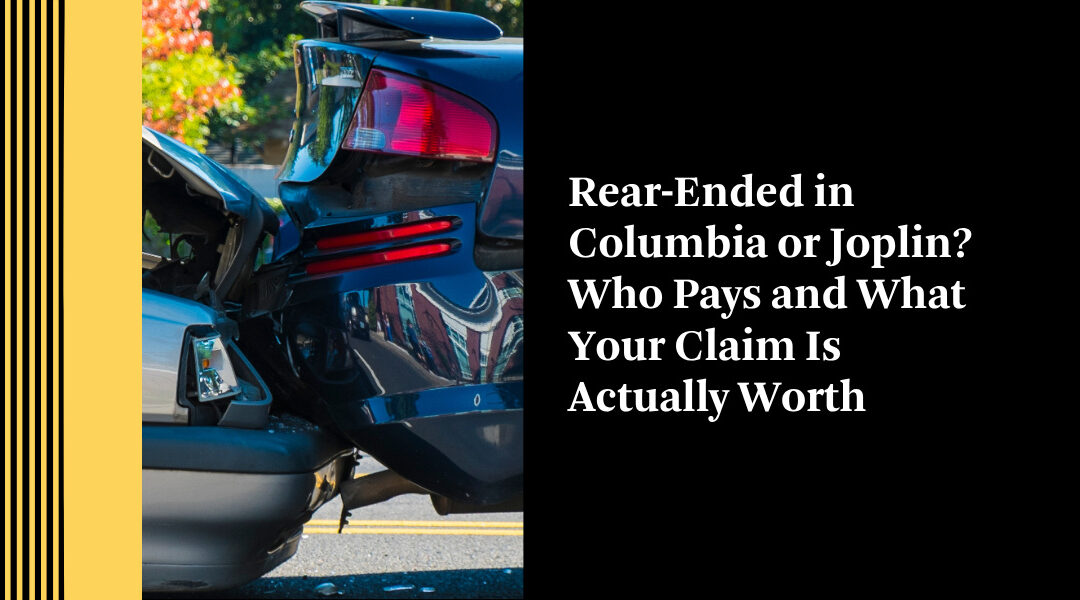
Rear-end collisions are the single most common type of car accident in the country, and they happen constantly on the streets of Joplin and Columbia. Stop-and-go traffic on Rangeline Road, distracted drivers on Stadium Boulevard, rainy backups on I-44, and the relentless construction season on I-70 all create the same recipe over and over again. One car stops. The car behind it does not.
If you have been rear-ended, you may have already heard from the other driver’s insurance company offering what sounds like a quick, easy settlement. Before you take it, there are a few things worth understanding about who actually pays in these cases and what your claim is genuinely worth.
Who Is at Fault in a Missouri Rear-End Accident?
In the vast majority of rear-end wrecks, the driver in the back is at fault. Missouri drivers are legally required to maintain a safe following distance and keep a proper lookout for traffic ahead. If you rear-end someone, the presumption is that you were either following too closely, distracted, speeding, or otherwise not paying attention.
That said, the presumption is not absolute. There are situations where some or all of the fault shifts. A driver who suddenly cuts in front of another car and slams on the brakes can share fault. A driver with broken brake lights or who reverses unexpectedly can share fault. A chain reaction wreck where the middle car was pushed into the lead car often involves a different liability picture than it appears at first glance. Missouri follows a pure comparative fault rule, so even if the other side argues you were partly responsible, you may still be entitled to recover a reduced amount.
The point is, even when fault seems obvious, the details matter. Insurance companies know this and will sometimes try to assign a small percentage of fault to the victim simply to reduce what they have to pay.
Why Rear-End Injuries Are Often Worse Than They Look
A common mistake people make after a rear-end wreck is assuming that low vehicle damage means low injury. Modern bumpers are designed to absorb impact and spring back, which can disguise the force actually transferred to the people inside the car.
Whiplash, herniated discs, concussions, and soft tissue damage are all common in rear-end crashes, and they often do not show their full severity for days or even weeks. Some injuries get worse with time as inflammation sets in and as the body tries to compensate for damaged structures. Insurance companies love to point to a minor-looking dent and argue that nobody could really be hurt in a wreck like that. Doctors and biomechanical experts know better, and so do we.
This is why getting medical attention the same day matters so much. A delay between the accident and your first doctor visit gives the other side ammunition to argue that whatever is wrong with you must have come from something else.
What Your Rear-End Claim Is Actually Worth
There is no fixed dollar amount for a rear-end case because every claim is built from the same general categories of damages, weighed by the specifics of what happened to you. The main pieces include medical expenses, both current and future, lost wages and lost earning capacity if your injuries affect your ability to work, vehicle damage and rental costs, and compensation for pain, suffering, and loss of normal life.
The severity of your injuries is usually the biggest driver of value. A soft tissue strain that heals in a few weeks is worth far less than a herniated disc requiring injections and physical therapy, which is in turn worth far less than a surgical case or a permanent injury. The strength of the liability evidence, the available insurance coverage, and the credibility of the witnesses all factor in as well.
What is almost always true is that the first offer from the insurance company is lower than what the case is actually worth. Adjusters are evaluated on how much money they save the company, not on how fairly they treat injured drivers. A serious offer usually only comes after the insurance company realizes the victim is represented and prepared to push back.
When to Call a Car Accident Lawyer
The honest answer is sooner rather than later. The longer you wait, the more time the insurance company has to lock you into a recorded statement, get medical records before your injuries are fully diagnosed, and steer the claim in a direction that benefits them. There is no charge to find out where you stand.
With more than 45 years of experience and over $200 million in settlements and judgments, Sticklen & Sticklen has handled rear-end cases on every major road in Boone County and Jasper County, and we know how the insurance carriers in this part of Missouri operate. If you have been rear-ended and want to know what your case is really worth, call our Joplin car accident attorneys at (417) 626-9880 or our Columbia car accident attorneys at (573) 303-3848 for a free consultation. We will give you a straight answer, and we will not charge you a fee unless we recover for you.